Drip Irrigation in Kenya
Drip Irrigation in Kenya
Kenya’s agriculture is at a turning point. With unpredictable rainfall, rising input costs, and the pressure to produce more food on smaller plots, farmers can no longer rely on rain-fed farming alone. Drip irrigation is no longer a luxury for large commercial farms—it is a practical, affordable tool for smallholder farmers, kitchen gardeners, and greenhouse growers across the country. Whether you are in Utawala, Kiambu, or Kisumu, understanding how drip systems work and where to get them can transform your harvest.
Why Drip Irrigation Makes Sense for Kenyan Farmers
Drip irrigation delivers water directly to the root zone of each plant, drop by drop. This simple principle eliminates the runoff, evaporation, and water waste associated with furrow or sprinkler irrigation. According to Kenya’s Ministry of Agriculture, a well-designed and managed drip irrigation system has an efficiency of over 90% compared to other irrigation methods. In a country where water scarcity limits crop output, that efficiency is not just an environmental benefit—it is an economic one.
For smallholder farmers in semi-arid regions, the stakes are high. A recent study of onion farmers in Laikipia Central Subcounty found that over half still rely on traditional furrow irrigation, while only 5.53% have adopted drip irrigation. The barriers include upfront costs, limited access to credit, and insufficient extension support. Yet the same study notes that climate change awareness and extension visits are positively associated with drip adoption, suggesting that with the right information and financing, more farmers would make the switch.
The Real Savings: Water, Labour, and Money
Drip irrigation saves more than water. For farmers using watering cans, the labour of carrying water along rows is exhausting and time-consuming. A bucket drip kit, for example, can supply water to 200 crops on a 30-square-metre plot using just 50 litres over two days—saving over 70% of the water compared to can irrigation. These kits rely on gravity, require no electricity, and cost around KSh 4,880, making them accessible to kitchen garden farmers who cannot afford larger systems.
Where to Buy Drip Kits in Kenya
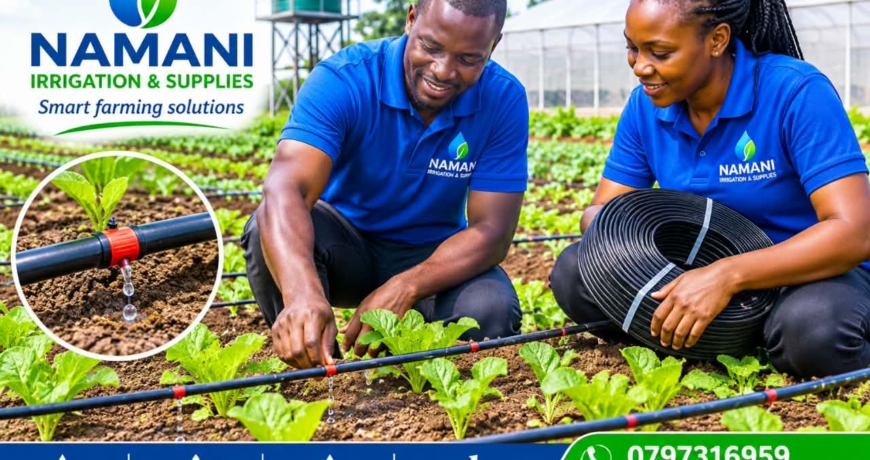
One trusted option is Namani Irrigation, based in Utawala, Nairobi. They stock UV-stabilised drip tapes with a five-year warranty and offer free technical advice to help farmers size their systems correctly before spending. You can reach them on 0797 316959 to discuss your farm size and crop type. They also deliver across Kenya, from Kiambu to Kisumu and Mombasa to Kitale. For farmers who prefer to see the equipment before buying, visiting their yard in Utawala along the Eastern Bypass is a practical first step.
Getting Started: Practical Steps
If you are considering drip irrigation, start small. Measure your plot, identify your crop, and calculate your water source. A simple bucket kit works well for a kitchen garden, while a solar-powered system suits a greenhouse or a quarter-acre plot. Before buying, call a supplier like 0797 316959 and describe your farm—reputable dealers will help you avoid oversizing or undersizing your system. Finally, join a farmer group or Water Resource Users Association where possible; group membership is linked to higher drip adoption rates and can improve access to credit.
Connect and Learn More
For tutorials, offers, and farmer success stories, follow Namani Irrigation on Facebook, TikTok, and Instagram. Visit our website to browse drip kits and greenhouse packages, or stop by their Utawala location to see the systems in person. Drip irrigation is not just a technology—it is a practical pathway to lower costs, higher yields, and greater resilience in a changing climate.
There are no comments