
How to Install Drip Irrigation in Kenya
How to Install Drip Irrigation in Kenya
Are you looking for an efficient and cost-effective way to water your crops in Kenya? Drip irrigation is the perfect solution! This method saves water, reduces labor costs, and increases crop yields. In this guide, we’ll walk you through how to install drip irrigation in Kenya, ensuring your farm gets the best watering system.
Why Choose Drip Irrigation in Kenya?
Drip irrigation is ideal for Kenya’s climate because:
Saves Water – Delivers water directly to plant roots, reducing wastage.
Increases Yields – Consistent moisture improves crop growth.
Reduces Weeds – Water only reaches desired plants.
Works on Slopes – Perfect for hilly areas.
Affordable & Low Maintenance – Once installed, it requires minimal upkeep.
Now, let’s dive into how to install drip irrigation in Kenya.
Materials Needed for Drip Irrigation Installation
Before starting, gather these supplies:
Mainline Pipe (PVC or HDPE) – Transports water from the source.
Drip Lines or Tapes – Tubes with emitters that release water.
Filters – Prevent clogging from debris.
Pressure Regulator – Controls water pressure.
Fittings & Connectors – Joins pipes and drip lines.
Valves – Controls water flow.
Punch Tool – For inserting drippers.
Flush Valve – Cleans the system.
Get high-quality drip irrigation kits from Namani Irrigation (0797316959).
Step-by-Step Guide to Installing Drip Irrigation
Plan Your Layout
-
Measure your farm and sketch where crops are planted.
-
Decide the best path for the mainline and sub-main pipes.
-
Ensure the water source (tank, borehole, or tap) is close.
Install the Water Source & Filtration
-
Connect a filter to remove dirt and sand.
-
Add a pressure regulator (if using tap or pump).
-
Use a fertilizer injector (optional) for fertigation.
Lay the Mainline & Sub-Mains
-
Dig shallow trenches (about 30cm deep) for pipes.
-
Lay the mainline pipe from the water source across the farm.
-
Connect sub-main pipes to distribute water to different sections.
Install Drip Lines or Tapes
-
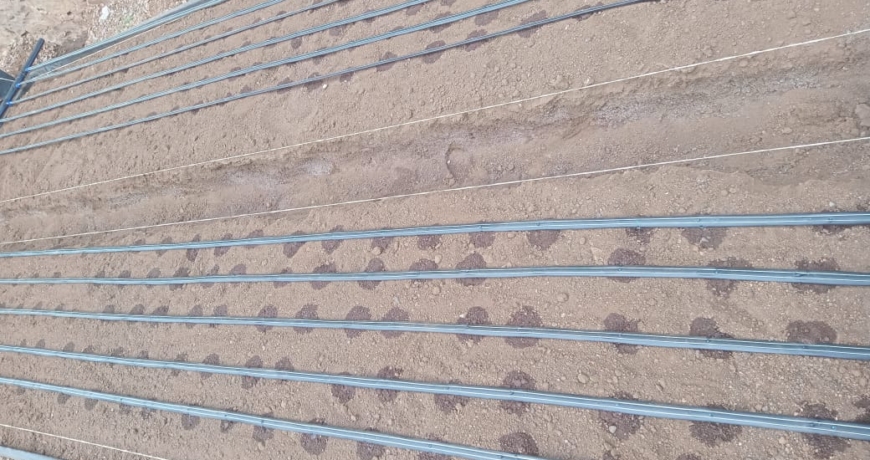
Lay drip tapes along plant rows, ensuring emitters face upward.
-
Secure them with stakes to prevent movement.
-
Use a punch tool to add drippers where needed.
Connect Fittings & Valves
-
Attach elbows, tees, and connectors for smooth water flow.
-
Install control valves to manage different zones.
-
Add an end cap or flush valve at the end of each line. Test the System
-
Turn on the water and check for leaks.
-
Ensure all emitters are working and water reaches every plant.
-
Flush the system to remove any debris.
Maintain Your Drip Irrigation System
Clean filters regularly to prevent clogging.
Check for leaks and repair damaged pipes.
Flush the system monthly to remove sediments.
For expert installation and maintenance, call Namani Irrigation at 0797316959.
Best Crops for Drip Irrigation in Kenya
Drip irrigation works well for:
-
Vegetables (Tomatoes, onions, kale, cabbages)
-
Fruits (Watermelons, strawberries, bananas)
-
Flowers (Roses, carnations)
-
Greenhouses (Ideal for controlled watering)
Cost of Drip Irrigation in Kenya
Prices vary depending on farm size:
-
Small farms (1/4 acre): Ksh 35,000 – Ksh 530,000
-
Medium farms (1 acre): Ksh135,000 – Ksh 185,000
-
Large farms (5+ acres): Customized pricing
Namani Irrigation offers affordable drip irrigation kits (0797316959).
Where to Buy Drip Irrigation Kits in Kenya
For reliable drip irrigation supplies, contact:
Namani Irrigation – 0797316959
Website
Facebook
TikTok
We supply and install drip irrigation across Kenya and East Africa.
There are no comments


