
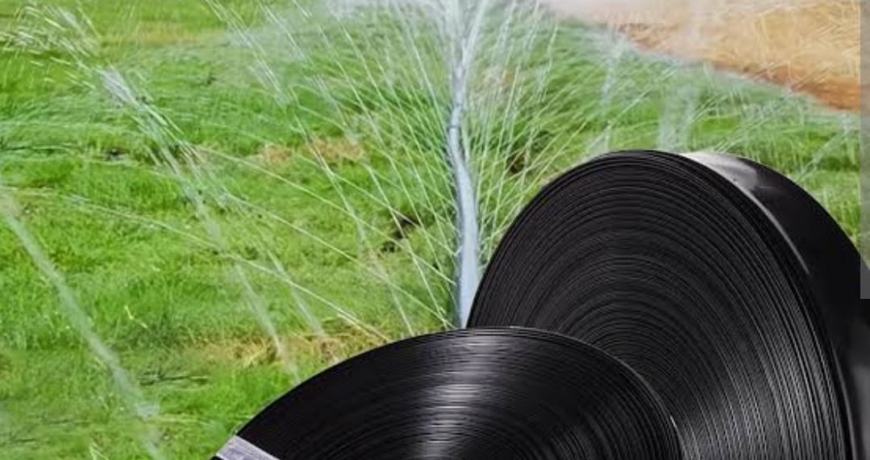
Rainhose Irrigation in Kenya
Rainhose Irrigation in Kenya
Are you a farmer in Kenya struggling with unreliable rainfall and rising water costs? You’re not alone. With less than 5% of Kenya’s cultivated land under reliable irrigation, most farmers remain dependent on unpredictable rain patterns . But there’s a game-changing solution gaining popularity across the country: rainhose irrigation. Call or Whatsapp 0797316959 Utawala.
What Is Rainhose Irrigation?
Rainhose irrigation, also known as rain pipe irrigation, uses flexible, perforated hoses that spray water evenly across your crops in a rain-like pattern . When connected to a water source under pressure, these specially designed pipes with tiny laser-punched holes distribute moisture uniformly over a wide area.
Unlike drip irrigation that targets plant roots directly, rainhose covers a larger surface area—making it perfect for row crops, vegetables, and open fields .
How It Works
-
Water flows through UV-treated polyethylene pipes
-
Tiny holes release water in a gentle spray
-
Coverage radius of 2–4 meters per side
-
Works with low water pressure (1–1.5 bars recommended)
-
Mimics natural rainfall for optimal crop growth
Why Kenyan Farmers Are Switching to Rainhose Irrigation
Affordable and Cost-Effective
Rainhose systems are significantly cheaper than sprinkler systems and many drip irrigation setups. Prices range from KES 3,500 to KES 7,000 depending on length and diameter .
For a 1-acre setup, complete rain hose kits cost between KES 75,000 to KES 115,000—a worthwhile investment considering the yield improvements .
Water Efficiency
In water-scarce regions like Machakos and Makueni, every drop counts. Rainhose irrigation:
-
Minimizes evaporation and runoff
-
Uses less water than flood irrigation
-
Works during cooler hours to reduce water loss
Easy Installation
No technical skills required! Rainhose systems are:
-
Lightweight and flexible
-
Simple to lay across fields
-
Quick to set up and dismantle
-
Easy to maintain
Versatile for Many Crops
Rainhose irrigation works brilliantly for:
-
Vegetables: Sukuma wiki, spinach, tomatoes, onions, cabbage
-
Seedlings and nurseries: Tree saplings, flower beds
-
Animal feeds: Super Napier, Lucerne, star grass
-
Field crops: Maize, beans, short-cycle crops
-
Fruit plantations: Bananas, passion frui
Soil Preservation
Unlike flood irrigation that causes soil erosion and compaction, rainhose:
-
Waters gently, preventing soil displacement
-
Maintains soil structure
-
Reduces erosion
-
Promotes healthier root development
Essential Rainhose Accessories
To set up a complete system, you’ll need:
-
Mainline pipes (HDPE or PVC) for water supply
-
Connectors and fittings (tee, elbow, couplings)
-
End caps to seal pipe ends
-
Filters to prevent clogging (50 mesh recommended)
-
Ball valves for flow control
-
Rainhose stakes to secure pipes along rows
Installation Guide: Getting Started
Step 1: Plan Your Layout
-
Measure your farm size
-
Determine row spacing (5–6 meters apart recommended)
-
Calculate pipe length needed
Step 2: Prepare Trenches
-
Dig trenches about 1 foot deep and 30 cm wide
-
Lay HDPE or PVC mainline pipes
Step 3: Connect Components
-
Connect mainline to water source (tank or pump)
-
Install tee fittings at marked sections
-
Attach ball valves for flow control
-
Connect rain hose pipes to mainline using connectors
Step 4: Lay Rainhose Pipes
-
Spread pipes along crop rows
-
Ensure emitter holes face upward
-
Seal ends with end caps
-
Secure with stakes
Real Success Stories from Kenyan Farmers
Kiambu County
Small-scale vegetable growers use 1-inch rainhose for spinach, sukuma wiki, and coriander with impressive results .
Nakuru Horticultural Farms
Tomato and onion farmers rely on 2-inch rainhose for broad coverage with less effort .
Machakos and Makueni
Water-scarce regions use rainhose during cooler hours to minimize evaporation and maximize water use .
Coastal Kenya
Kilifi and Kwale farmers use rainhose for passion fruit and coconut seedlings, with the system performing well even in sandy soils .
Drip Irrigation Kits in Kenya : Which Is Better?
While drip irrigation has its place, rainhose offers unique advantages:
| Feature | Rainhose | Drip |
|---|---|---|
| Cost | More affordable | Higher initial investment |
| Coverage | Waters wide areas | Targets individual plants |
| Installation | Simple, no skills needed | Requires technical knowledge |
| Maintenance | Easy, less frequent issues | Higher maintenance needs |
| Crop suitability | Best for closely spaced crops | Ideal for widely spaced crops |
| Water rate | Higher flow rate, faster irrigation | Lower flow rate, longer irrigation time |
What We Offer:
Premium quality rainhose pipes – UV-treated, pressure-tested, long-lasting
Complete kits for all farm sizes – from kitchen gardens to commercial farms
Expert support – We guide you through installation and maintenance
Affordable pricing – Making modern irrigation accessible to all farmers
Nationwide delivery – From Nairobi to Kisumu, we bring it to your farm
Training and after-sales support
Call/WhatsApp: 0797 316959
Visit Our Showroom:
Utawala, Along Eastern Bypass
Next to Quickmart kwa Chief
Nairobi, Kenya
There are no comments


