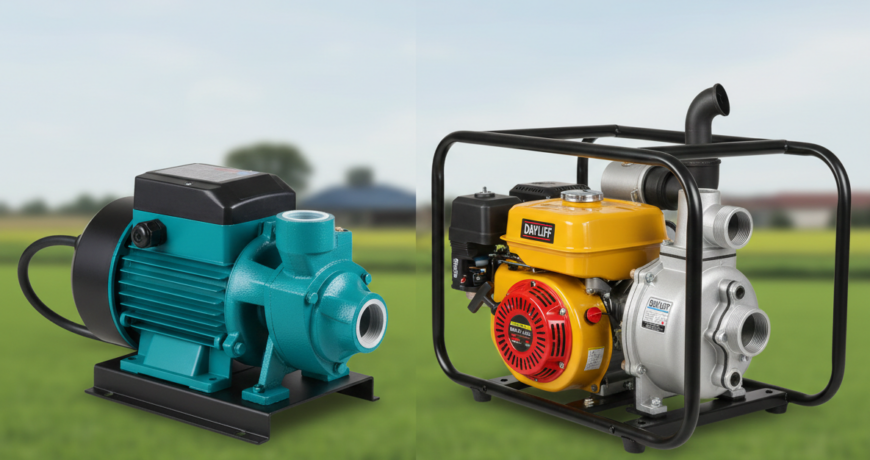
Electric Pump vs Diesel Pump Kenya
Electric Pump vs Diesel Pump Kenya: The Ultimate Long-Term Cost Analysis for Farmers & Agribusiness
Choosing between an electric and diesel water pump for your farm in Kenya isn’t just about the sticker price. It’s a critical decision that will impact your profitability for the next decade. With rising fuel costs and unreliable grid power, how do you truly calculate the smarter investment?
At Namani Irrigation, we don’t just sell pumps. We provide cost-saving irrigation solutions tailored to your specific land, crop, and power access. Stop guessing and start optimizing. Contact our pump experts today for a FREE, no-obligation site assessment and lifetime cost projection.
Understanding the Real Cost: Beyond the Price Tag
Many farmers in Nakuru, Eldoret, and Naivasha make pump decisions based solely on upfront cost. However, this approach often leads to expensive mistakes. The true measure of pump value lies in Total Cost of Ownership (TCO) over 5-10 years.
Upfront Capital Investment
Diesel pumps typically cost 20-30% less initially than equivalent electric models. For instance, a quality 10HP diesel pump might cost Ksh 85,000-120,000, while a comparable electric pump ranges from Ksh 110,000-150,000. Nevertheless, this initial savings can be deceptive.
Solar-hybrid electric systems require higher upfront investment. Yet, they deliver unmatched long-term value. Moreover, financing options and government incentives often offset initial costs.
The Long-Term Operational Cost Breakdown
Fuel Cost Analysis: Where Your Money Really Goes
Operational costs reveal the true story of pump economics. Therefore, let’s examine realistic Kenyan scenarios.
Diesel Pump Operating Costs:
- Current diesel price: Ksh 180-210 per liter
- 10HP diesel pump consumption: 2.5-3 liters/hour
- Hourly fuel cost: Ksh 450-630
- Monthly cost (200 hours): Ksh 90,000-126,000
- Annual fuel expense: Ksh 1,080,000-1,512,000
Electric Pump Operating Costs:
- KPLC tariff: Ksh 24-28 per kWh (commercial rate)
- 10HP electric pump consumption: 7.5 kWh
- Hourly electricity cost: Ksh 180-210
- Monthly cost (200 hours): Ksh 36,000-42,000
- Annual electricity expense: Ksh 432,000-504,000
The difference is staggering. Electric pumps can save you up to Ksh 1,000,000 annually in operational costs alone. Furthermore, diesel prices remain volatile, while KPLC rates offer relative stability.
Maintenance & Reliability: The Hidden Cost Factor
Diesel pumps demand intensive maintenance. Consequently, service requirements include:
- Oil changes every 200-300 hours (Ksh 3,500-6,000)
- Fuel filter replacements (Ksh 1,500-2,500 quarterly)
- Air filter servicing (Ksh 800-1,500)
- Injector cleaning/replacement (Ksh 15,000-35,000 annually)
- Engine overhauls at 3,000-5,000 hours (Ksh 80,000-150,000)
Electric pumps, by contrast, require minimal maintenance:
- Annual motor bearing lubrication (Ksh 1,500-3,000)
- Capacitor replacement every 3-5 years (Ksh 2,500-5,000)
- Basic cleaning and connection checks
Annual maintenance costs typically run Ksh 60,000-100,000 for diesel versus Ksh 8,000-15,000 for electric. Additionally, diesel pumps experience more frequent breakdowns during critical irrigation periods.
Labor & Convenience: Time is Money
Diesel pump operation requires constant attention. Specifically, farmers must:
- Transport and store fuel safely
- Refuel pumps multiple times daily
- Monitor oil levels and engine temperature
- Handle fuel spillage and contamination risks
Electric pumps offer set-and-forget convenience. Simply flip a switch or use automated controls. This simplicity translates to labor savings and peace of mind.
Total Cost of Ownership: The 5-Year Reality Check
Let’s calculate the complete picture for a 10HP pump running 2,400 hours annually:
Diesel Pump (5-Year TCO):
- Initial cost: Ksh 100,000
- Fuel (5 years): Ksh 6,300,000
- Maintenance: Ksh 400,000
- Total: Ksh 6,800,000
Grid Electric Pump (5-Year TCO):
- Initial cost: Ksh 130,000
- Electricity (5 years): Ksh 2,400,000
- Maintenance: Ksh 60,000
- Total: Ksh 2,590,000
Savings with electric: Ksh 4,210,000 over 5 years
The crossover point occurs within the first 3-6 months. After that, every hour of operation deepens your savings with electric power.
The Power Availability Factor: Kenya’s Reality
Grid reliability remains a concern for many farmers. Consequently, three solutions exist:
Option 1: Diesel-Only (High Cost, High Reliability)
Suitable for remote areas without grid access. However, operational costs remain prohibitively expensive for most applications.
Option 2: Grid-Electric (Lower Cost, Variable Reliability)
Ideal for areas with stable KPLC supply. Power interruptions can disrupt irrigation schedules, though.
Option 3: Solar-Hybrid Electric System (Optimal Solution)
This approach combines grid power with solar backup. It delivers:
- 40-60% reduction in electricity bills through solar daytime operation
- Automatic grid switchover during cloudy periods
- Complete independence from fuel price volatility
- Zero emissions and environmental sustainability
- Government tax incentives for solar installations
Namani Irrigation specializes in solar-hybrid pumping systems, positioning your farm for maximum efficiency and future-proof operation.
Why Namani Irrigation is Your Trusted Partner
Making the right pump choice requires expert guidance. That’s precisely where Namani Irrigation excels.
Expert Consultation
We analyze your unique conditions:
- Water source depth and availability
- Required flow rates and pressure heads
- Land topography and crop water requirements
- Power access options and costs
- Budget constraints and ROI expectations
Quality Equipment Partners
We supply trusted, efficient brands for both electric pump vs diesel pump Kenya applications. Our partnerships ensure you receive genuine products with full warranty support.
Solar Pumping Specialists
As pioneers in solar irrigation technology, we design systems that maximize energy independence. Our installations span coffee farms in Kiambu, horticultural operations in Naivasha, and large-scale tea estates in Kericho.
Visit our showroom to see working demonstrations of various pump configurations.
End-to-End Service Excellence
From initial consultation through installation and ongoing maintenance, we’re with you every step. Our technical team provides:
- Professional site assessments
- Custom system design
- Expert installation
- Preventive maintenance programs
- Genuine spare parts availability
- 24/7 emergency support
Follow us on Instagram and TikTok for irrigation tips, customer success stories, and seasonal promotions.
Making Your Decision: Key Considerations
Several factors influence the best water pump for farming Kenya applications:
- Power Access: Grid availability determines your primary options
- Water Requirements: Daily volume and pressure needs affect pump sizing
- Budget: Consider both initial investment and 5-10 year TCO
- Reliability Needs: Critical irrigation periods demand dependable power
- Environmental Goals: Solar systems align with sustainable farming practices
For most stationary irrigation applications with grid access, electric pumps deliver superior long-term value. Solar-hybrid configurations offer the ultimate combination of reliability and economy.
Diesel pumps remain viable for:
- Truly remote locations without grid access
- Mobile pumping applications
- Emergency backup systems
- Short-term or seasonal use
The Bottom Line
While diesel pumps may appear cheaper initially, electric solutions—especially solar-hybrid systems—provide dramatically lower lifetime costs. For a typical commercial farming operation, switching to electric can save over Ksh 4 million in just five years.
The “best” pump isn’t determined by initial price. Rather, it’s the system perfectly matched to your farm’s unique conditions, optimizing both performance and profitability.
Take Action Today: Invest in Your Farm’s Future
Ready to unlock maximum efficiency and minimize your lifetime pumping costs?
Schedule your free consultation with Namani Irrigation now. Our experts will assess your specific needs and provide a detailed TCO analysis comparing all options for your situation.
Contact us today:
- Call/WhatsApp: +254 797 316959
- Visit: namaniirrigation.co.ke
- Find us: Utawala – Nairobi Our Location on Google Map
- Connect: Facebook | Instagram | TikTok
Let’s grow your profitability together with the right irrigation pump suppliers Kenya can trust.
There are no comments