Slope Irrigation Kenya
Slope Irrigation Kenya: Complete Guide for Sloped Land Systems
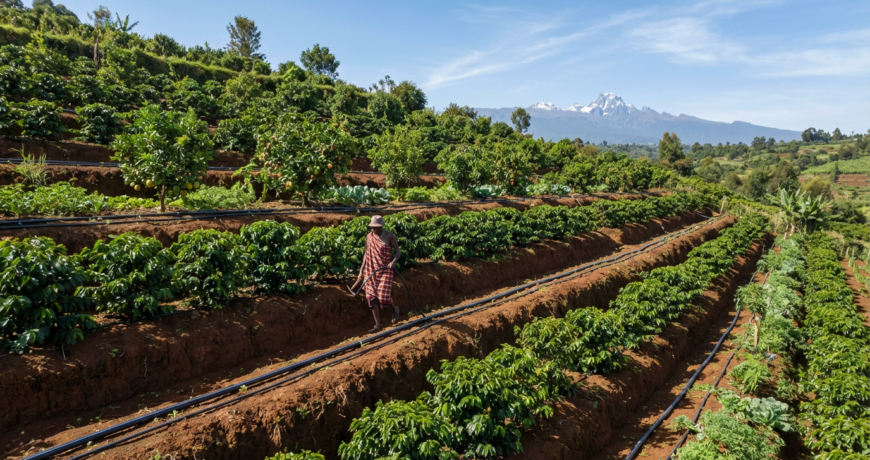
If your farm is on a slope in Kenya, you’ve likely faced the frustration of watching precious water—and your investment—wash away down the hill. Effective slope irrigation Kenya systems are essential for hillside farmers dealing with uneven watering, soil erosion, and high pump costs. These challenges aren’t inevitable; they’re signs of an irrigation system fighting against the terrain, not working with it. Whether you’re cultivating coffee on the slopes of Mount Kenya, growing vegetables in the Rift Valley, or managing a hillside tea plantation in Kericho, proper slope irrigation Kenya design transforms your challenging terrain into productive farmland.
Understanding Slope Irrigation Kenya: Unique Hillside Challenges
Kenya’s diverse topography presents unique slope irrigation challenges that demand specialized solutions. From the volcanic soils of the Central Highlands to the varied terrain of the Rift Valley, understanding your specific slope conditions is the first step toward irrigation success.
Water Pressure Management in Slope Irrigation Kenya
Gravity is both your greatest ally and your biggest challenge in slope irrigation Kenya projects. For every 10 meters of elevation drop, water pressure increases by approximately 1 bar (14.5 PSI). On a steep slope, this means that drippers or sprinklers at the bottom of your field could receive two to three times more pressure than those at the top, resulting in dramatically uneven water distribution. The top sections of your farm become chronically under-watered while the bottom sections are flooded, wasting water and potentially damaging crops.
Soil Erosion Prevention in Kenya’s Slope Irrigation
Kenyan hillsides, particularly during the long rains from March to May and short rains from October to December, are highly susceptible to erosion. Traditional flood irrigation or poorly designed slope irrigation systems can accelerate soil loss, carrying away your most fertile topsoil along with expensive fertilizers and amendments. In regions like Murang’a and Nyeri, where red volcanic soils dominate, the visual evidence of erosion—red streaks running down slopes—tells the story of wasted resources.
Variable Soil Infiltration Rates Across Kenyan Slopes
Different Kenyan regions feature dramatically different soil types that affect slope irrigation Kenya design. The black cotton soils of Naivasha have different water retention characteristics than the sandy loams of coastal regions or the clay-rich soils of Western Kenya. A slope magnifies these differences, as water naturally moves downward, creating wet and dry zones that shift with your terrain.
Energy Costs in Slope Irrigation Systems
Pumping water uphill is expensive. Many farmers oversize their pumps to compensate for elevation changes, leading to excessive energy consumption and shortened equipment life. With Kenya’s rising electricity costs, an inefficient slope irrigation system can consume profits as quickly as it delivers water.
Design Principles for Successful Slope Irrigation Kenya Systems
Successful slope irrigation Kenya installation isn’t about fighting gravity—it’s about working with it intelligently. At Namani, we always recommend starting with these fundamental design principles.
Terracing and Contour Management for Slope Irrigation
Before installing any slope irrigation Kenya system, consider your land preparation. Terracing, while labor-intensive initially, transforms steep slopes into manageable irrigation zones. Even simple contour bunds can slow water movement and create level planting areas. Your slope irrigation system should follow these contours, not fight against them.
When we design slope irrigation Kenya systems for hillside farms, we map contour lines and position mainlines along these natural level paths. This allows lateral pipes to run perpendicular to the slope with minimal elevation change, creating more uniform pressure zones.
Pressure Zoning: The Key to Uniform Slope Irrigation
Professional slope irrigation Kenya design divides your field into pressure zones based on elevation. Each zone operates at optimal pressure through the strategic use of pressure-regulating valves. For a 50-meter elevation change, you might create three or four distinct zones, each with its own valve assembly that maintains consistent operating pressure regardless of position on the slope.
Our team often solves pressure variation problems in slope irrigation by installing pressure-compensating components at strategic points. This investment pays for itself through improved crop uniformity and water savings within a single growing season.
Essential Components: Pressure Regulators and Control Valves
Pressure regulators are non-negotiable in slope irrigation Kenya systems. These devices maintain consistent downstream pressure even as upstream pressure fluctuates due to elevation or system demand changes. At Namani Irrigation, we supply commercial-grade pressure regulators calibrated specifically for drip and sprinkler applications, ensuring your slope irrigation system delivers the exact pressure each component needs.
Air and Vacuum Relief Valves for Slope Systems
One of the most overlooked components in slope irrigation Kenya installations is the air valve. As water drains from elevated sections of pipe, negative pressure can develop, potentially collapsing thin-walled drip lines or causing damage during system startup. Air/vacuum relief valves automatically release trapped air during filling and admit air during draining, protecting your infrastructure investment.
Choosing Your Slope Irrigation Kenya Technology: Drip vs. Sprinkler
Not all irrigation systems handle slopes equally well. Your crop type, soil characteristics, and slope gradient should guide your slope irrigation Kenya technology choice.
| Factor | Drip Irrigation | Micro-Sprinklers |
|---|---|---|
| Best For | Perennial crops (coffee, macadamia, avocado), vegetables in rows | Ground covers, nurseries, some vegetables, wider crop spacing |
| Water Efficiency | 90-95% (highest efficiency) | 80-85% (good efficiency) |
| Slope Suitability | Excellent (follows contours, minimal runoff) | Good (requires careful spacing on steep slopes) |
| Pressure Sensitivity | Requires pressure compensation | Moderate (benefits from regulation) |
| Maintenance | Moderate (filter maintenance critical) | Lower (less sensitive to partial clogging) |
| Initial Cost | Moderate to high | Moderate |
| Wind Sensitivity | None | Can affect distribution pattern |
| Wetting Pattern | Narrow strip or point source | Circular, 2-6 meter diameter |
Drip Systems: The Efficiency Champion for Slope Irrigation Kenya
Drip irrigation has revolutionized slope irrigation Kenya throughout the coffee belt and horticultural zones. By delivering water directly to the root zone at low pressure, drip systems eliminate runoff while maximizing every drop.
For hillside applications, pressure-compensating drippers are essential in slope irrigation. Standard drippers would deliver vastly different flow rates at different elevations, but PC drippers maintain uniform output across pressure ranges of 0.5 to 4 bar. This means your coffee trees at both the top and bottom of your Muranga slope receive identical water volumes.
Our heavy-duty driplines feature reinforced walls that resist crushing when laid along terraced slopes and include anti-siphon features that prevent soil ingestion when the system shuts down. For permanent crops in slope irrigation Kenya, we recommend inline drippers spaced according to your crop spacing—typically 40-60cm for coffee, 75-100cm for macadamia.
Micro-Sprinklers: Versatile Coverage for Kenya Slope Systems
Micro-sprinklers offer advantages for crops requiring broader coverage in slope irrigation Kenya or for gentle to moderate slopes where the wetting diameter can be managed effectively. They’re particularly effective for young tree nurseries on hillsides, where root development benefits from broader water distribution.
On slopes, we recommend models with built-in pressure regulation and anti-drain valves to prevent low-head drainage when the system cycles off. Strategic placement along contours ensures overlapping coverage without creating runoff channels in your slope irrigation system.
Essential Components from Namani for Slope Irrigation Kenya
A standard filter isn’t enough for slope irrigation Kenya systems. Our graded sand media filters are essential to protect your downstream drip lines from sediment clogging, a common issue with runoff and sediment naturally moving downhill in Kenyan soils. These filters handle the higher sediment loads typical of hillside water sources while providing automatic backwash capabilities for low maintenance.
Durable Piping Infrastructure for Slope Irrigation
The backbone of any slope irrigation Kenya system is its piping network. We supply:
- HDPE mainlines (32mm-90mm): Flexible enough to follow terrain contours while strong enough to handle pressure variations in slope irrigation. UV-stabilized for Kenya’s intense equatorial sun.
- PVC submains and laterals: Rigid PVC for straight sections where stability is needed, particularly for buried lines on terraces.
- Pressure-rated fittings: All connection points must be rated for your maximum system pressure plus a safety margin. Cheap fittings are false economy in slope irrigation Kenya where pressure surges are common.
Pressure-Compensating Drippers for Slope Systems
Standard drippers simply cannot maintain uniform output on significant slopes. Our pressure-compensating drippers feature internal flexible membranes that adjust flow passages as pressure changes, delivering consistent output from 0.5 to 4 bar—essential for slope irrigation Kenya. Available in flow rates from 2 to 8 liters per hour, they’re suitable for everything from vegetables to mature fruit trees.
For commercial slope irrigation installations, our pre-installed PC dripline comes in 200-meter rolls, with emitters precisely spaced and pressure-tested. The streamlined installation saves labor costs—critical when working on difficult hillside terrain.
Filtration Systems Designed for Slope Irrigation Kenya
Beyond sand media filters for high-sediment sources, we offer:
- Screen filters (80-200 mesh): For cleaner water sources, protecting against organic matter and small particles
- Disc filters: Self-cleaning designs that handle moderate sediment loads with minimal maintenance
- Combined filtration stations: Multi-stage filtration for the most demanding slope irrigation Kenya applications
Your filtration choice depends on your water source. At Namani, we test your water and recommend the appropriate filtration level to protect your slope irrigation investment.
Fertigation Systems for Slope Irrigation
Fertigation—applying fertilizer through your slope irrigation Kenya system—is particularly effective on slopes where traditional broadcasting leads to nutrient runoff. Our Venturi injectors and dosing pumps allow precise nutrient delivery directly to root zones, improving uptake efficiency while reducing environmental impact.
Step-by-Step Implementation Guide for Slope Irrigation Kenya
Professional installation ensures your slope irrigation Kenya system performs as designed. While we always recommend working with experienced installers, understanding the process helps you plan effectively.
Step 1: Topographic Assessment and Mapping
Accurate elevation mapping is non-negotiable for slope irrigation Kenya projects. Using GPS elevation data or traditional surveying, create a contour map with 2-5 meter intervals depending on slope steepness. Identify:
- Total elevation change across the irrigated area
- Water source location and elevation
- Access points for mainline installation
- Existing terraces or contour bunds
- Soil type variations across the slope
This data determines your pressure zones, pipe sizing, and pump requirements. Our team provides professional site assessments using surveying equipment calibrated for the precision needed in slope irrigation Kenya design.
Step 2: Hydraulic Design and Pump Sizing
Hydraulic calculations account for friction losses, elevation changes, and system flow requirements. For a slope irrigation system, you must calculate:
- Static head: Elevation difference between pump and highest irrigation point
- Friction losses: Pipe friction at your design flow rate
- Pressure requirements: Operating pressure needed at the highest point
- Total dynamic head: Sum of all pressure requirements
Proper pump sizing is critical for slope irrigation Kenya. Oversized pumps waste energy and money; undersized pumps underperform. At Namani Irrigation, we provide detailed hydraulic calculations and pump recommendations matched to your specific site conditions and power source (electric, diesel, or solar).
Step 3: Material Selection and Procurement
With your slope irrigation Kenya design complete, source quality materials rated for your system pressures. Key specifications:
- Pipe pressure ratings exceeding your maximum system pressure by 25%
- UV-stabilized materials for above-ground installations
- Pressure-compensating emitters for elevation changes over 5 meters
- Filtration appropriate to your water source sediment load
- Pressure regulation valves for each zone
Namani stocks comprehensive slope irrigation supplies, from bulk mainline pipe to individual fittings, ensuring material consistency and compatibility across your entire system.
Step 4: Installation Following Contours
Begin slope irrigation Kenya installation at your water source, laying mainlines along primary contours. Use these best practices:
- Secure all pipes: On slopes, use ground stakes, saddles, or burial to prevent movement. Unsecured pipes will migrate downhill during operation.
- Install air valves: Place automatic air release valves at all high points and vacuum relief valves where pipes dip.
- Flush thoroughly: Before installing drippers or sprinklers, flush all lines to remove installation debris.
- Test pressure zones: Verify each zone maintains design pressure before final connection.
- Install end-line flush valves: Essential for slope irrigation systems where sediment naturally accumulates at low points.
Professional installation typically requires 2-4 days for a one-hectare slope irrigation Kenya system depending on terrain complexity.
Step 5: Commissioning and Calibration
Proper slope irrigation system startup prevents problems:
- Fill the system slowly to allow air to escape through air valves
- Check all zones for uniform pressure using a pressure gauge
- Measure actual flow rates at multiple points in each zone
- Adjust pressure regulators to achieve design specifications
- Verify filtration system backwash cycles operate correctly
- Document baseline performance for future reference
Step 6: Maintenance Schedule for Slope Irrigation Kenya
A well-maintained slope irrigation Kenya system operates efficiently for 10-15 years or more. Establish this routine:
Weekly:
- Check filter pressure differential and backwash if needed
- Inspect visible pipes for leaks or damage
- Verify pump operation and pressure readings
Monthly:
- Flush all lateral lines using end caps
- Inspect sample drippers for clogging
- Check fertigation equipment operation
Seasonal (before each growing season):
- Comprehensive system pressure test
- Replace damaged drippers or sprinklers
- Service pump and motors
- Acid-flush drip lines if hard water deposits are present
Annual:
- Professional slope irrigation system audit and hydraulic testing
- Calibrate pressure regulators and flow meters
- Replace filters and worn components
Our maintenance team provides service contracts for commercial operations, ensuring optimal slope irrigation Kenya performance throughout your crop cycle.
Converting Slope Challenges into Competitive Advantages
When properly designed, a slope irrigation Kenya system offers unexpected benefits. Gravity-assisted drainage prevents waterlogging in lower zones. The elevation naturally creates pressure for lower zones, potentially reducing pumping requirements if you design multi-level systems strategically. Most importantly, the investment in a professional slope irrigation system differentiates your operation, producing higher quality crops with greater consistency than competitors fighting their terrain.
Kenyan farmers working with Namani-designed slope irrigation Kenya systems report 30-50% water savings compared to previous methods, more uniform crop growth, and reduced labor for water management. One Muranga coffee farmer increased his cherry quality grade by 15% within two seasons of installing a properly zoned drip system—the uniform water stress during ripening created more consistent bean development.
Conclusion: Partner with Slope Irrigation Kenya Experts
Your hillside farm isn’t a liability—it’s an opportunity waiting for the right slope irrigation Kenya solution. While the challenges are real, they’re solved problems when you work with experienced designers who understand both irrigation engineering and Kenyan agricultural conditions.
Stop letting gravity work against you. Partner with Namani Irrigation to design a slope irrigation Kenya system that harnesses it. Visit our showroom in Utawala, Nairobi or Call/WhatsApp our experts at +254 797 316959 to get started with a solution built for your land’s specific gradient and crops.
Whether you’re irrigating two acres of vegetables or two hundred acres of coffee, our team has the expertise, components, and local knowledge to make your slope irrigation system a success. We supply everything from pressure-compensating drippers to complete turnkey installations, backed by ongoing technical support and maintenance services.
The best time to fix your slope irrigation Kenya challenges was yesterday. The second-best time is today. Contact Namani Irrigation now for your free slope assessment and discover how professional irrigation design transforms challenging terrain into your most productive land.
Namani Irrigation – Your Slope Irrigation Kenya Experts
Location: Utawala, Nairobi – Get Directions
Call/WhatsApp: +254 797 316959
Website: namaniirrigation.co.ke
Follow us for expert irrigation tips:
There are no comments